Our thoughts
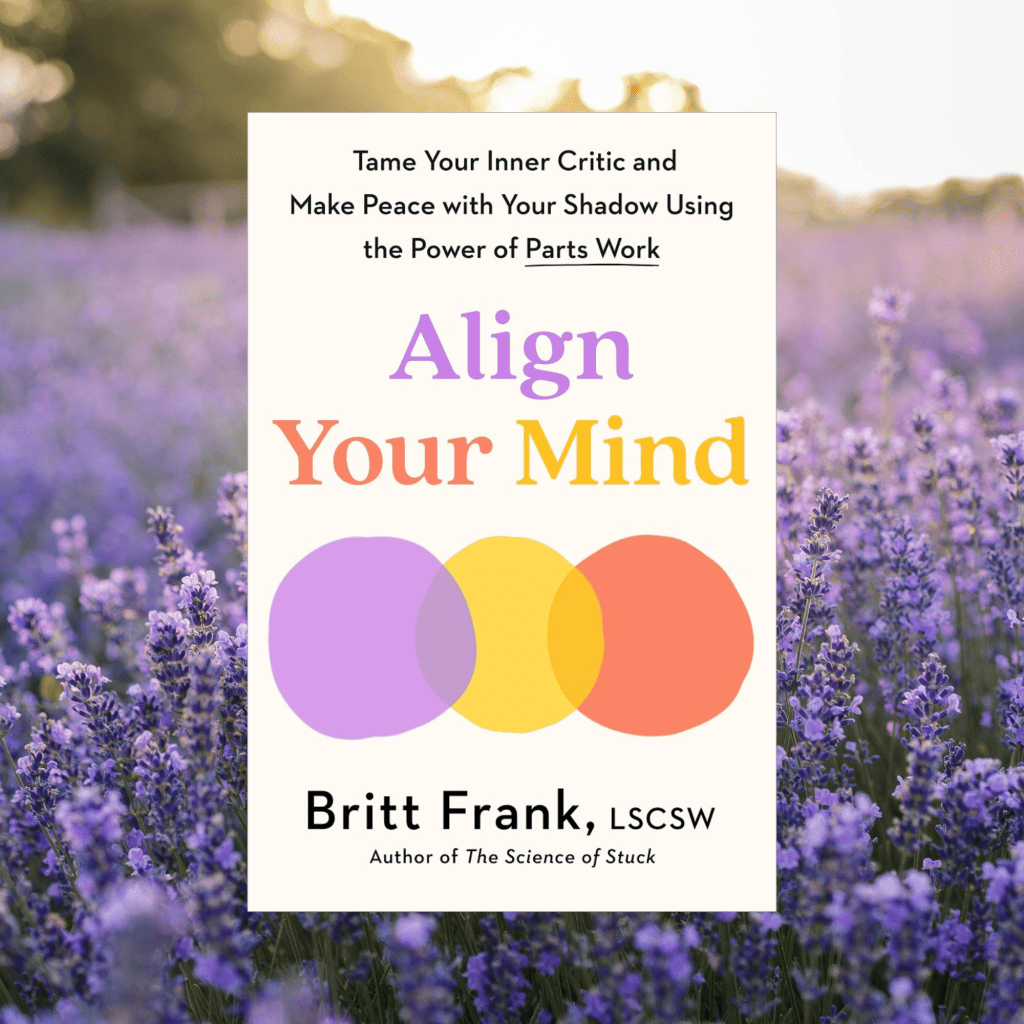
Align Your Mind is a practical personal development book that helps you understand and manage the different «voices» inside your head. Instead of seeing inner conflict as a problem, Britt Frank explains that it’s actually normal and even useful.
The core idea of the book is called «parts work». It suggests that your mind is made of up of different parts, like your inner critic, inner child, or impulsive side. These parts aren’t flaws they each serve a purpose, even if they sometimes hold you back.
Something we especially like about the author’s approach is how practical and accessible it is. Each chapter ends with clear, concrete conclusions, so even if you only have time to read the summaries, you’ll still walk away with valuable insights. On top of that, the book includes simple exercises to help you apply what you’ve learned, along with helpful “do” and “don’t” lists that make the ideas easy to put into practice in real life.
Genre: Self Help – Release: May 2025 – Review: April 2026
About the author
Britt Frank is an American neuropsychotterapist and an expert in human behavior. She earned her bachelor’s degree from Duke University and her master’s degree in Social Work from the University of Kansas, where she later became an award-winning adjunct instructor. Britt is a contributor to Psychology Today, and her work has been featured in Forbes, NPR, Fast Company, Psych Central, SELF, and Thrive Global, all popular media outlets in the United States. You can find more information at https://www.brittfrank.com
Key insights from the book
Your mind isn’t something to “fix”, it’s something to understand.
This book offers a refreshing shift in perspective: instead of battling your thoughts and emotions, it invites you to explore how your brain actually works. At its core, your brain is designed for one thing, survival. That means it naturally leans toward safety, certainty, and avoiding risk, even when those instincts hold you back.
One of the most powerful takeaways is this: your brain isn’t broken, it’s protective.
The habits and patterns you struggle with aren’t failures, they’re adaptations that once served a purpose.
The author introduces five simple steps to help you slow down, become aware, and choose your response calmly, instead of reacting on autopilot.
That shift moves you from resistance to alignment, and that’s where growth becomes possible.
A simple but powerful read that can change how you see yourself, and how you move forward.
Follow us on Instagram and Pinterest for daily content!
More resources and practical tools
Before you can change your patterns, you need to understand the system behind them. Your brain isn’t a single voice or function, it’s a network of specialized parts, each playing a role in how you think, feel, and act. When you see how these systems interact, your reactions start to make a lot more sense.
- Neocortex: Logic, reasoning, decision-making, and strategy.
- Limbic System: Emotional processing; the amygdala detects threats and triggers stress responses.
- Basal Ganglia: Habit formation and automatic behaviors.
- Cerebellum: Coordination and movement control.
- Brain Stem: Essential life functions such as breathing, heart rate, and digestion.
These systems work together to constantly evaluate your environment and determine whether you are safe.
When your brain perceives a threat, real or imagined, it activates one of four automatic responses:
- Fight: Confrontation, tension, emotional reactivity, tunnel vision
- Flight: Avoidance, distraction, or escape behaviors
- Freeze: Inability to act, think, or speak
- Fawn: People-pleasing to maintain safety
These responses are not flaws; they are adaptive mechanisms shaped by your environment, genetics, and past experiences.
Mindfulness is often misunderstood. It does not mean eliminating thoughts, it means observing them without becoming entangled in them.
However, mindfulness is only accessible when your body feels safe. If your nervous system is in a heightened survival state, your brain prioritizes protection over reflection. This is why emotional regulation is essential, it helps shift your brain from “lion mode” (threat response) to “logic mode” (clear thinking).
Not all aspects of your inner world are within your conscious awareness. These “shadow parts” are traits, emotions, or patterns that exist outside your immediate perception.
Important notes:
– These parts are not your identity, they are only parts of you.
– They develop as protective mechanisms.
– Their purpose is survival, not self-expression.
1. Create Space with Self-Talk: Using third-person self-talk (e.g., addressing yourself by name) can slow down your thinking and create distance between stimulus and response.
2. Allow Emotions Without Over-Identifying: Being with your feelings means acknowledging them without letting them take control. Emotions are signals, not commands.
3. Start with “Micro-Yeses”: A “micro-yes” is the smallest possible action you can take without triggering resistance. This approach works with your brain’s need for safety, rather than pushing against it.
4. Embrace Gradual Progress: The pace you start at is not the pace you must maintain. Sustainable change begins small and builds over time.
Most of us try to control our thoughts or push away uncomfortable emotions. But real change doesn’t come from force, it comes from understanding. These five steps offer a simple, practical way to work with your mind instead of against it.
1. Acknowledge → “Am I having a thought or a feeling?”
The first step is awareness. Pause and name what’s happening internally.
– Is this a thought (a story, belief, or assumption)?
– Or a feeling (an emotional or physical sensation)?
This small distinction creates space between you and your reaction. Instead of being overwhelmed, you begin to observe.
2. Listen → “What is this part trying to tell me?”
Every reaction has a purpose. Instead of shutting it down, get curious and ask yourself:
– What is this part of me trying to communicate?
– What is it afraid of? What does it need?
When you listen without judgment, your internal system starts to feel safer, and less reactive.
3. Investigate → Ask better questions
Now go a little deeper.
- When did I feel this before?
- What triggered this reaction?
- Is this about the present moment, or something from the past?
Investigation isn’t about overthinking, it’s about understanding patterns. And once you see the pattern, you have more choice.
4. Gratitude → Appreciate the protection
This step changes everything… even the thoughts or behaviors you don’t like are trying to help you in some way. Maybe they’re protecting you from rejection, failure, or pain. So, instead of fighting them, try saying: “Thank you for trying to protect me.”
This softens your internal resistance and builds trust with yourself.
5. Negotiate → “What do I do with this?”
Now that you understand what’s happening, you can choose your response. Ask:
– What do I actually need right now?
– What would be helpful—not just familiar?
This is where alignment happens. You’re no longer reacting automatically, you’re responding intentionally.
Disclaimer
This space is meant for reflection and inspiration, not diagnosis or professional advice. Nothing we share is intended to replace medical guidance or encourage you to step away from professional support. Always trust yourself, and when needed, trust qualified professionals.
 curated bookmark